SPH-Tool
Advancing composite manufacturing through SPH — capturing molten-stage mixing and flow in PEEK, PEKK, PPS and other polymers, where classical mesh-based methods struggle.
Thank you for reading this post, don't forget to subscribe!🌊 𝐀𝐝𝐯𝐚𝐧𝐜𝐢𝐧𝐠 𝐂𝐨𝐦𝐩𝐨𝐬𝐢𝐭𝐞 𝐌𝐚𝐧𝐮𝐟𝐚𝐜𝐭𝐮𝐫𝐢𝐧𝐠 𝐓𝐡𝐫𝐨𝐮𝐠𝐡 𝐒𝐏𝐇: 𝐔𝐧𝐝𝐞𝐫𝐬𝐭𝐚𝐧𝐝𝐢𝐧𝐠 𝐌𝐢𝐱𝐢𝐧𝐠 & 𝐅𝐥𝐨𝐰 𝐢𝐧 𝐭𝐡𝐞 𝐌𝐨𝐥𝐭𝐞𝐧 𝐒𝐭𝐚𝐠𝐞
In composite manufacturing, especially when working with high‑performance thermoplastics like PEEK, PEKK, PPS, or even commodity polymers such as PP, PA6, ABS, the molten stage determines everything: fiber wet‑out, void formation, consolidation quality, and final part performance.
At OTOMcomposite.eu, we explore how Smoothed Particle Hydrodynamics (SPH) brings a powerful new lens to understanding these molten‑stage behaviours.
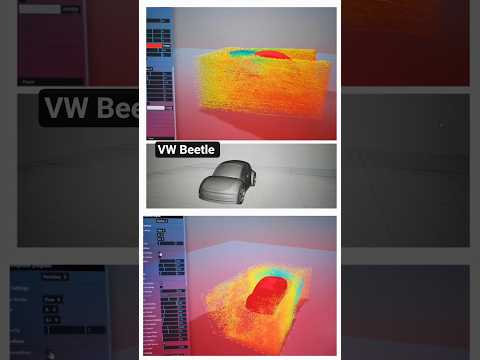
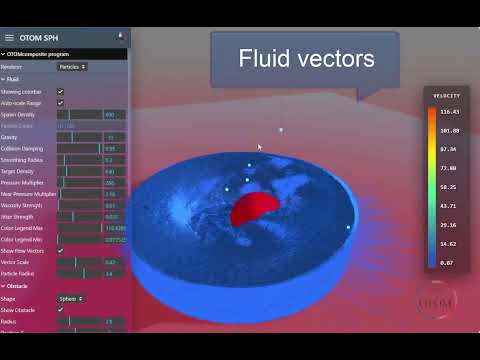
OTOM SPH in action
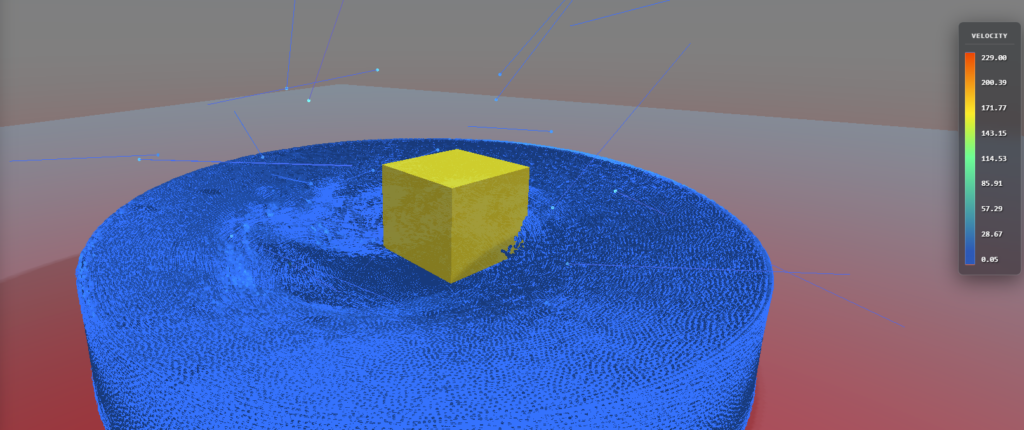
Particle-based flow, mixing and streamlines, all running in real time in the browser. Try it at otomcomposite.eu/SPH.
▶ Hopper discharge: coffee beans through a 25° vs 45° vs 65° funnel




🔬 Why SPH for Composites?
Unlike traditional mesh‑based methods, SPH is particle‑based.
This means the simulation follows the physics of the melt as a collection of interacting particles, capturing:
✔ Complex mixing behaviour inside melts
✔ High‑viscosity flow typical of advanced polymers
✔ Shear‑dependent resin movement around fiber bundles
✔ Free‑surface and interface motion during impregnation
✔ Compaction‑driven squeeze flow in forming or consolidation
This makes SPH ideal for studying molten resin flow both within and between fiber layers, something that’s notoriously difficult to capture with classical CFD.
𝘔𝘪𝘹𝘪𝘯𝘨 𝘉𝘦𝘩𝘢𝘷𝘪𝘰𝘶𝘳 𝘰𝘧 𝘔𝘰𝘭𝘵𝘦𝘯 𝘗𝘰𝘭𝘺𝘮𝘦𝘳𝘴
Thermoplastic resins often exhibit non‑Newtonian, shear‑sensitive behaviour. SPH helps visualize how polymer chains move and mix under heat and pressure, ensuring more uniform melt quality before impregnation.
𝐌𝐚𝐭𝐞𝐫𝐢𝐚𝐥𝐬 𝐖𝐡𝐞𝐫𝐞 𝐒𝐏𝐇 𝐒𝐡𝐢𝐧𝐞𝐬
SPH modeling is especially valuable for molten‑stage understanding in:
PEEK / PEKK (PEAK family): high melt viscosity, complex crystallization
PEI, PPS, challenging flow under pressure
PP, PA6, ABS, PET, are widely used in hybrid or short‑fiber composites
Each resin has a unique flow behaviour, and SPH helps tailor process settings to its rheology.
Fluid Dynamics
Calculating the Drag ( ) and Lift () coefficients in a real-time SPH simulation is a step toward “scientific” visualization. While the SPH method is usually visual, you can extract these coefficients by measuring the total force the fluid particles exert on your sphere.
The Physics Strategy
To find these coefficients, you don’t use a simple lookup table; you measure the actual “impact” of thousands of particles in real-time.
- Drag Force (F_d): The total force acting parallel to the fluid flow direction.
- Lift Force (F_l): The total force acting perpendicular to the fluid flow direction.
The formulas for the coefficients are:
- : Fluid density.
- v: Relative velocity between the fluid and the sphere.
- A: Frontal area of the sphere
try it here:
https://otomcomposite.eu/SPH/: SPH-Tool